Samantha and I are both fans of the current zeitgeist that
is the superhero-fiction genre. Though, it can be agreed that it wasn’t The Avengers or The Dark Knight trilogy that introduced us to this genre. We were
introduced at a younger age, growing up on superhero cartoons, films like the
first Spider-Man franchise and of course X-Men, the Marvel franchise that
started off the 21st century.
X-Men, in our opinion, is one of the most significant and complex
superhero franchises. It brings about ideologies of political conflict and the
mutants’ eternal struggle of being accepted as ‘normal’. In many ways, it
parallels society’s prejudice towards the unknown (xenophobia) as well as how
different mutants believe this conflict between humans and mutants should be
overcome. There is a debate between mutants that is symbolic of right wing vs.
left wing, militarism vs. pacifism, and other socio-political issues.
SEBASTIAN SHAW:

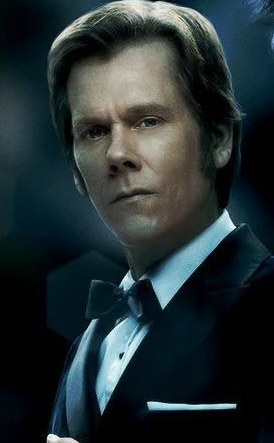
Mutants do not all belong to the X-Men. Stereotypically, audiences would expect all mutants to stay together and fight for the same reasons, using the same methods. However, some mutants have different ideologies to others; this of course causes conflict among mutants. Sebastian Shaw, the villain in First Class, believes that humans are a threat and are below mutants. He claims “We are the future of the human race”.
Sebastian Shaw is one of the characters who stands for the superiority of a certain race, the mutants, which symbolises a right-wing extremist character – he is for a social hierarchy, he is willing to kill those he sees as inferior, and in order to gain power. Who does that remind you of?

In this close-up shot, Sebastian Shaw is established as a villain. The low-key lighting and the gun shows his assertion of power on Magneto when he was a child. He wants to take over the world using mutants, and eradicate humans who he sees as the inferior species. From a Marxist point of view, Shaw is the bourgeoisie, asserting force on others in order to follow his ideologies. He can be interpreted as an extremist in bringing about his ideologies on the hegemonic mass of mutants, which means those who don’t follow him, as he claims “are my enemies”.
MAGNETO VS. PROFESSOR X:


Of course, this post can’t be complete without the ongoing ideological
conflict of Charles Xavier aka Professor X, and Erik Lehnsherr aka Magneto. Magneto
is similar to Sebastian Shaw in that he believes in mutant superiority.
Charles, on the other hand, wants the mutants to live peacefully amongst
humans, without prejudice. In many ways, it can be linked to the Civil Rights
movements, especially as it is set in the USA. The mutants are symbolic of a
minority group, and Charles and Erik believe in different methods of fighting
for mutants. Charles Xavier is a pacifist, not believing in using violence at
any means, but rather would ‘fight’ for rights by educating humans and
believing that they can coexist in peace. However, Erik is all for embracing
what mutants really are, for example by always telling Mystique that he prefers
her ‘real’ looks. And what separates Erik from Charles is that Erik is willing
to use violence to reach his goals. Whilst fighting for the same aims, their
methods are completely the opposite. Their ongoing ideological conflict is
represented by the chess that they play throughout the franchise. This is
symbolic of their two juxtaposing beliefs. This motif is continued, to show
that Erik will never be changed by Charles; no matter how many times Charles
has told him that “There is so much more to you than you know. Not just pain
and anger.”
MUTANT VS HUMAN:
 Then there is the conflict of mutants, who are the marginalised mass and the hegemonic mass, the humans, find it difficult to accept mutants. Some humans see mutation as dangerous because it is unknown to them, thus cannot be controlled by humans. Because they aren't humans, they are questioned of their human rights. The theme of prejudice runs in X-Men, whereby many humans stereotype mutants as dangerous, power-hungry creatures. Of course, characters like Professor X, and the X-Men squad prove that wrong - just because they have the 'X gene' does not take away their humanity. And this is similar to minorities, who have been seen as inhuman or inferior just because of their differences. Whether that be due to ethnicity, sexuality, gender or appearance. Hence why, the X-Men is complex in its portrayal of social, political and cultural difficulties which have and still occur in the real world.
No comments:
Post a Comment